








Walk through the streets of Bangkok around lunchtime, and one aroma rises above the rest. The sharp scent of sizzling garlic, fiery chili, and fragrant holy basil drifts effortlessly from tiny roadside kitchens, drawing hungry crowds toward one unmistakable dish: Pad Kra Pao.
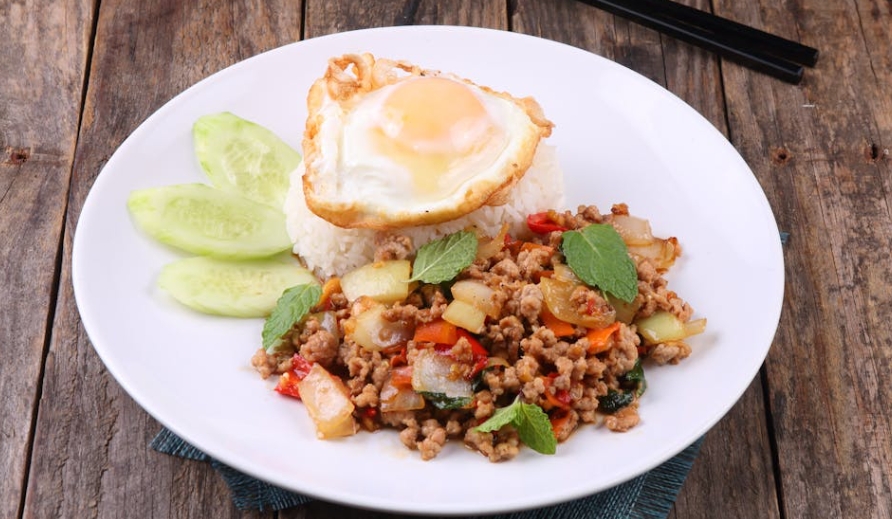
At first glance, it appears deceptively simple — minced meat stir-fried with holy basil, garlic, soy sauce, and chili, served over steaming jasmine rice with a crispy fried egg balanced on top. Yet beneath that humble presentation lies one of Thailand’s most beloved culinary creations, a dish that perfectly captures the spirit of Thai street food.
What makes Pad Kra Pao unforgettable is its remarkable balance of flavor. Thai holy basil, known locally as bai kra pao, carries a naturally peppery fragrance that intensifies the moment it touches the heat of a blazing wok. Combined with bird’s eye chili and deeply caramelized garlic, the result is bold, savory, aromatic, and intensely satisfying all at once.
Then comes the fried egg — an essential finishing touch rather than a mere garnish. Street food veterans often insist the edges should be crisp and golden while the yolk remains slightly runny, allowing it to melt naturally into the rice and spicy meat below. That richness softens the heat while adding another layer of comfort to the dish.
Part of Pad Kra Pao’s enduring popularity also comes from its versatility. Across Thailand, vendors prepare it with pork, chicken, beef, seafood, or even crispy pork belly for extra indulgence. Modern cafés and contemporary Thai restaurants have introduced vegetarian and plant-based interpretations, but traditional street stalls still favor minced pork for its affordability and rich flavor.
Yet the true beauty of Pad Kra Pao extends beyond taste alone. It is deeply woven into everyday Thai life. Office workers rely on it for quick lunches, university students order it after classes, and taxi drivers stop for it during late-night shifts. It is the kind of meal that feels appropriate at any hour — familiar, reliable, and endlessly comforting.
Unlike many globally popular dishes that gradually lose their authenticity overseas, Pad Kra Pao has managed to preserve its identity remarkably well. Even in upscale restaurants, chefs rarely attempt to overcomplicate it. The dish succeeds precisely because of its restraint. Every ingredient serves a purpose, and every flavor arrives with clarity.
In recent years, social media and travel culture have introduced Pad Kra Pao to international audiences, with food bloggers frequently praising it as one of Asia’s greatest comfort foods. For locals, however, it has never been a passing trend. It is simply part of daily life — a dependable dish that delivers warmth, spice, and satisfaction in every bite.
Pad Kra Pao is proof that true culinary refinement does not require luxury ingredients or elaborate presentation. Behind its modest appearance lies a carefully balanced harmony of heat, aroma, texture, and tradition — a dish that continues to define the heart of modern Thai cuisine.