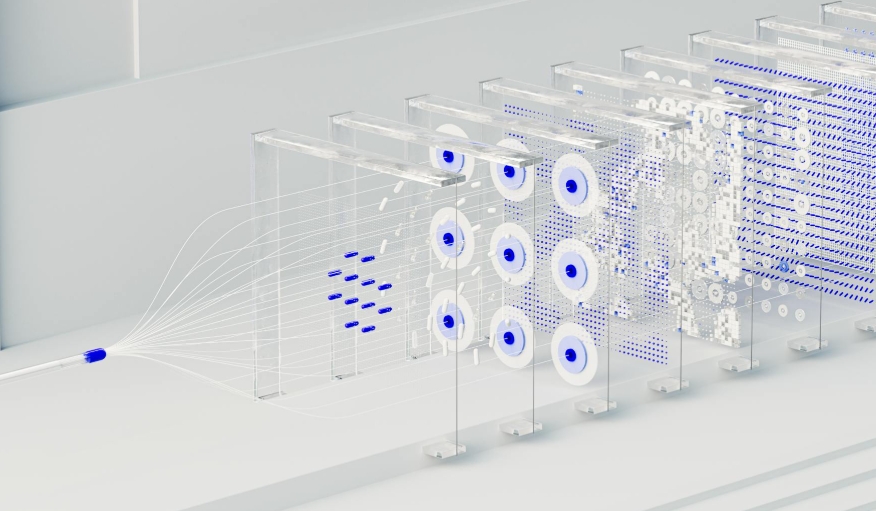









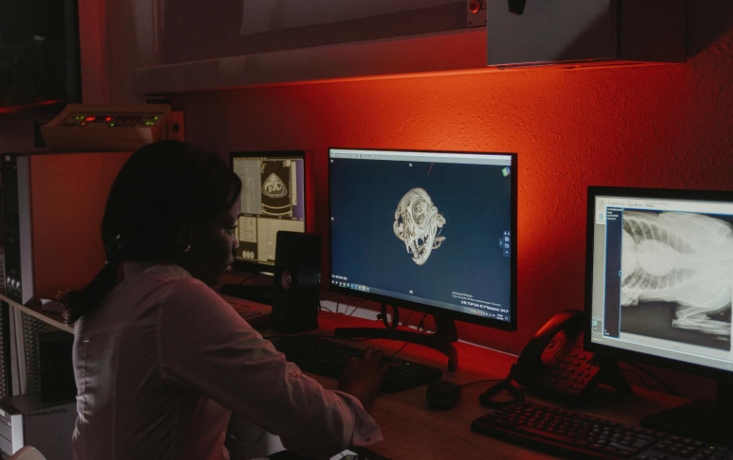
Artificial intelligence has rapidly become one of the most influential technologies in modern healthcare. From disease prediction to medical image analysis, AI systems are increasingly supporting doctors, researchers, and hospitals in improving diagnostic accuracy and operational efficiency. In recent years, advancements in deep learning and large-scale medical datasets have accelerated the practical adoption of AI-driven healthcare solutions worldwide.
Traditional healthcare systems often rely heavily on human expertise and manual analysis, especially in areas such as radiology and pathology. However, the growing volume of medical data has made it increasingly difficult for specialists to process information efficiently. Artificial intelligence offers a promising solution by automating repetitive tasks and identifying complex patterns that may not be immediately visible to humans.
2. Key Applications of AI in Healthcare
AI technologies are now used across several important medical domains.
| Application Area | Main Function | Key Benefit |
|---|---|---|
| Medical imaging | Disease detection | Faster diagnosis |
| Predictive analytics | Risk forecasting | Early intervention |
| Virtual assistants | Patient support | Improved accessibility |
| Drug discovery | Molecule analysis | Reduced research time |
| Robotic surgery | Surgical assistance | Increased precision |
Medical imaging remains one of the most successful AI applications. Deep learning algorithms can analyze X-rays, CT scans, and MRI images with impressive accuracy, helping radiologists detect abnormalities more efficiently.
3. Technological Development Trends
Current AI development in healthcare shows several important trends:
- Increased integration of multimodal medical data
- Expansion of cloud-based healthcare platforms
- Growth of personalized treatment systems
- Development of explainable AI models
One major shift involves combining different forms of patient data, including imaging, genetic information, and electronic health records. This allows AI systems to generate more comprehensive analyses and personalized recommendations.
Another important trend is the growing focus on explainability. Many healthcare professionals remain cautious about fully automated systems because AI models often operate as “black boxes.” Researchers are therefore developing interpretable AI systems that provide clearer reasoning behind medical predictions.
4. Major Challenges and Limitations
Despite its advantages, AI in healthcare still faces several critical challenges.
| Challenge | Impact |
|---|---|
| Data privacy concerns | Limits data sharing |
| Regulatory approval | Slows implementation |
| Model bias | Reduces reliability |
| High infrastructure costs | Limits accessibility |
Medical data privacy remains one of the most sensitive issues. Hospitals and research institutions must comply with strict regulations regarding patient information protection. In addition, AI models trained on limited demographic datasets may produce biased results when applied to broader populations.
Another challenge involves regulatory approval. Medical AI systems require extensive validation before they can be safely implemented in clinical environments.
5. Future Perspectives
The future of AI in healthcare appears highly promising. Researchers expect AI systems to become more collaborative rather than fully replacing medical professionals. Instead of eliminating doctors, AI will likely function as a decision-support tool that enhances efficiency and accuracy.
Emerging technologies such as federated learning and physics-informed AI are also expected to improve model reliability while reducing privacy risks. As computational power continues to grow, healthcare systems may eventually achieve faster diagnostics, better treatment personalization, and more accessible medical services worldwide.
Ultimately, artificial intelligence represents a transformative force in healthcare. Although important technical and ethical challenges remain unresolved, ongoing research continues to push the boundaries of what AI-assisted medicine can achieve.